App stores contain many products with familiar layouts. A common genre pattern is not, by itself, proof of copying. The following disputes are different: courts examined evidence and issued infringement rulings. They are historical cases, not detections made by Copycat Checks.
Tetris and Mino: near identical gameplay screens
Xio Interactive released Mino for the iPhone. In 2012, the US District Court for New Jersey granted Tetris Holding summary judgment on copyright and trade dress claims. The court compared gameplay screenshots and videos, including the pieces, playfield, colors, and other visual choices. It found substantial similarity in protected expression, while acknowledging that the abstract idea of a falling block puzzle is not itself protected.
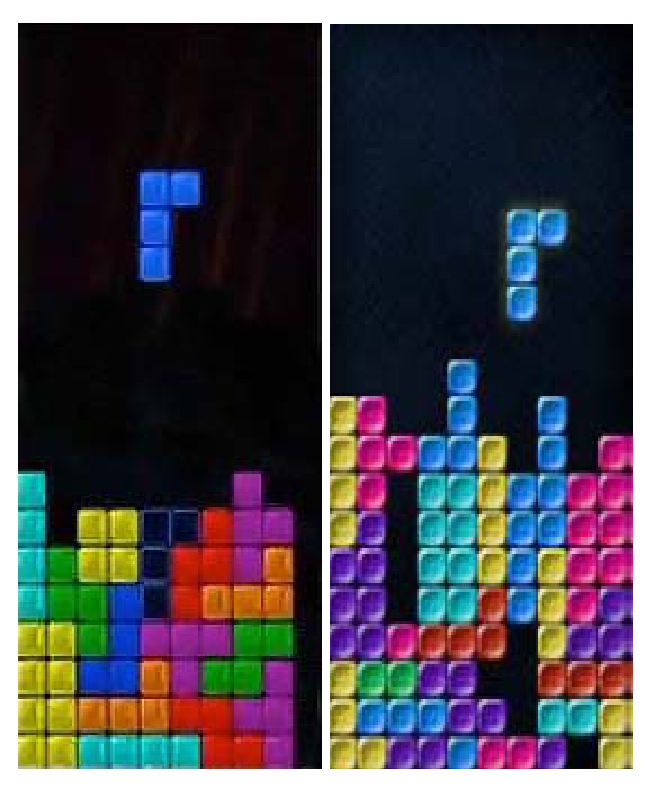
The decisive point was the combination of visual expression. The court did not say every game with falling blocks infringes Tetris.
Honor of Kings and Heroes Arena: the map details
In 2022, the Guangzhou Intellectual Property Court upheld an infringement finding involving the maps of the mobile games Honor of Kings and Heroes Arena. The court treated the standard three lane MOBA layout as a shared convention. It focused instead on the particular shapes and positions of obstacles, river routes, towers, and other map details.
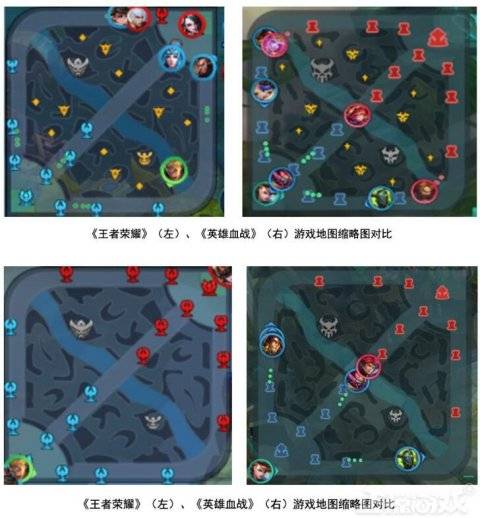
The appeal decision modified which defendants were liable, while keeping the infringement finding against the game operator. The ruling concerned the maps at issue, not the entire MOBA genre.
Taichi Panda and The Journey of Flower: a reskinned game
The Jiangsu High People’s Court upheld a ruling that The Journey of Flower used the specific presentation of gameplay from Taichi Panda. The court compared 29 gameplay systems for interface layout and rules, along with equipment values and other evidence. Different characters, story, music, and artwork did not resolve the copying of protected expression the court identified. The appeal court upheld a ¥30 million damages award.
The court’s published case summary describes the evidence and appeal outcome. We have not found an authenticated side by side screenshot exhibit for this case, so we do not present a later game screenshot as if it were part of the record.
What these cases mean for an app developer
All three rulings went beyond a single screenshot score. They considered original expression, access or development history, combinations of details, and the legal claims available in their jurisdictions. A screening tool can help you locate a candidate and save the current listing. It cannot decide whether the candidate infringes your rights.
For a possible App Store copycat, preserve the listing URL, developer name, dated screenshots, and the specific elements you believe were copied. Our evidence guide explains the next steps.